Fast turnarounds, clear reports, and testing that simulates how attackers really think.



















1000+
25,000+
85




COMPLIANCE
Our pentesting services help meet and exceed compliance standards.
Here are the frameworks we support:

Receive audit-ready reports mapped to your compliance requirements—easy to share and simple to explain.





Web App Pentesting
Find business-logic flaws, auth issues, and exploitable web app risk scanners miss.
API Pentesting
Test authorization, exposed data, endpoint abuse, and API workflows under real attack conditions.
Network Pentesting
Validate internal and external attack paths before adversaries turn exposure into access.
Cloud Pentesting
Review AWS, Azure, and GCP misconfigurations, identity risk, and cloud attack paths.
Explore service →
PTaaS Platform
Track findings, remediation, retesting, and audit-ready reporting in one place.
Explore platform →
SOC 2 Pentesting
Get auditor-accepted testing, verified findings, and remediation support before the audit crunch.
Explore service →
What types of penetration testing does Red Sentry offer?
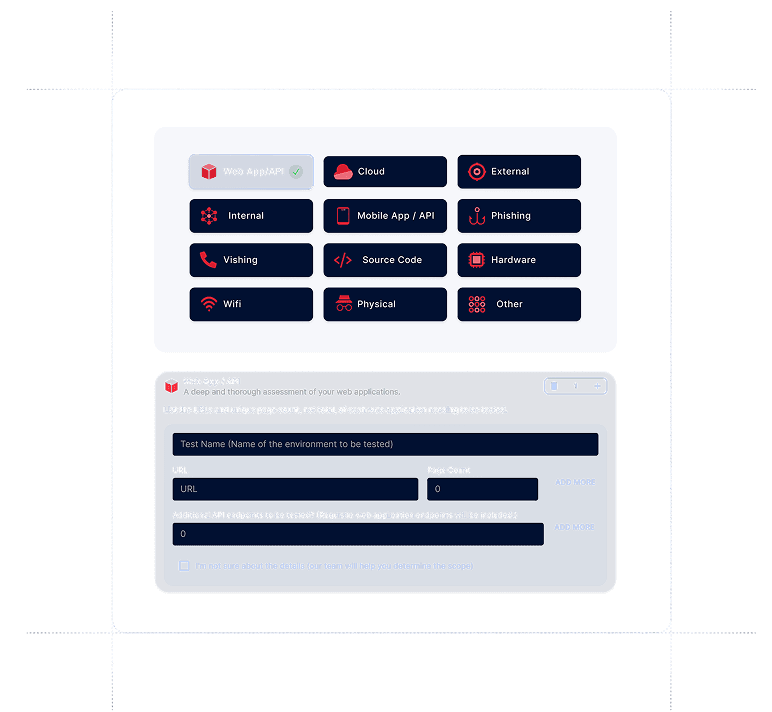
Red Sentry supports web application, API, network, cloud, compliance-focused, and PTaaS engagements. Each test is scoped around the systems, deadlines, and evidence your team needs.
How quickly can a pentest start?
Most teams can get scoped quickly, with clear pricing and scheduling based on target complexity, access readiness, and audit timelines.
Are reports ready for SOC 2, ISO 27001, HIPAA, or PCI audits?
Yes. Red Sentry focuses on practical, auditor-friendly reporting with verified findings, remediation guidance, and evidence teams can share with stakeholders.
What is PTaaS?
PTaaS means penetration testing as a service. It gives teams a central place to track findings, remediation, retesting, communication, and report delivery throughout the engagement.
How is Red Sentry different from automated scanners?
Automated scanners are useful, but they miss context. Red Sentry combines tooling with human-led testing to uncover business logic, chained vulnerabilities, and real-world exploit paths.
Do you support retesting after remediation?
Yes. Retesting helps confirm fixes, reduce audit friction, and give security teams confidence that reported vulnerabilities were actually resolved.